(For the full article, which is password protected, click here.)
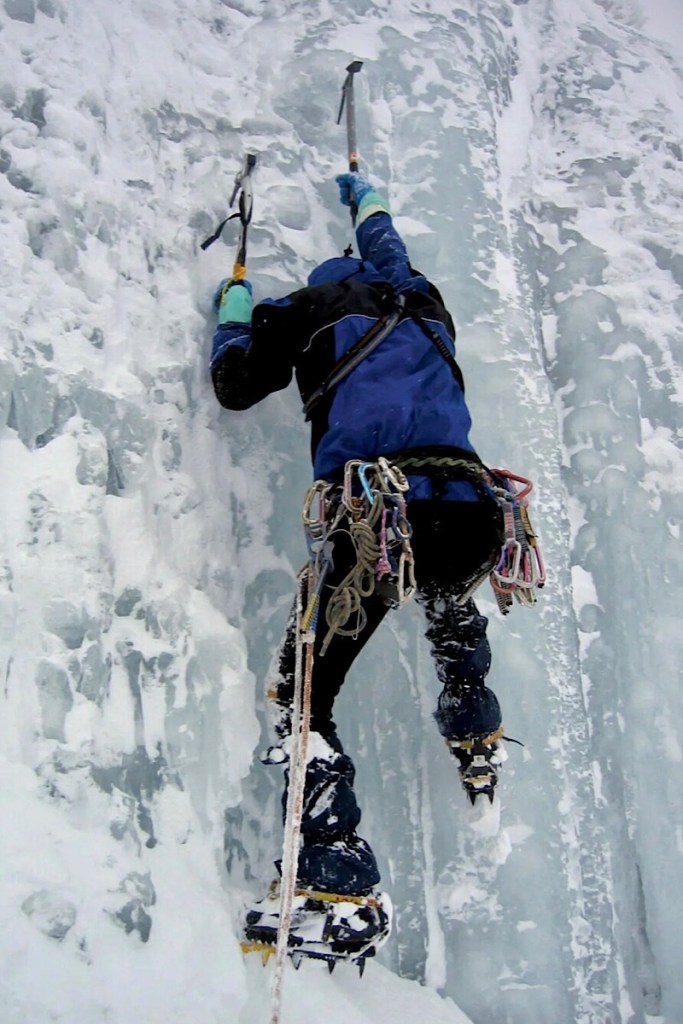
The split outer and inner persons of me were completely in opposition. Whilst I had great drive and a huge sense of invincibility, I spent years begging for cancer as an acceptable way to get off the horrible treadmill of life.
But looking back, switching off personal dignity and the boundaries of who I was, was the most dangerous. Without it I was open, without any kind of a moral or spiritual compass to direct me.
What follows is an example of how a significant element of my own trauma, written through private journaling and now shared, ended up having a greater significance than just the historical facts of what happened.
The particular trauma I write about was, amongst other lesser events, fundamental in creating an enduring damage to my sense of self-worth. Along with a need to cover up how deeply it had affected me, the trauma suppressed much of the joy of my life.
Writing it and re-writing this piece many times over the years has helped me to decode the mental gymnastics I created to cope in the hard times, observe the cost it had on my mental health, and work to improve it with a host of different methods and therapies.
It has been one of the most important processes in powering my own “Hero’s Journey” of finding the strength to overcome the legacy of trauma, and self doubt and find a place of authenticity where I could truly stand up and say “This is me”.
This piece might also bring some understanding as to why, following abuse, some people push themselves to ridiculous and life-threatening limits, in order to expel or exorcise, through exhaustive trauma coping strategies, the perceived weakness of themselves to tolerate the abuse.
The piece, I hope, is also an example of expressive writing, used to facilitate healing and the release of trauma.
I have written the piece with the greatest accuracy possible, sparing the worst details, names changed etc, but also I have finally been able to write it with a caring and more relaxed stance, with less pain than when I first wrote it, and with a compassion for those who might benefit from my sharing.
What follows was written many years ago, although it has recently been edited.
hidden section here
When I speak, I don’t expect to be believed. The meaning in my voice is lost into thin air.
I was the youngest in my family, the sassenach at school; the outcast due to my accent; bullied. Not being believable became a core belief of mine. It affected me all my life, as far back as I can remember. Who I was inside did not seem important to others and what I said didn’t seem believable, no matter how loudly or eloquently I spoke. My voice seemed hollow. I didn’t even believe it myself.
During my passage into adulthood, I’d learned to communicate better with the outside world by writing; it seemed to hold more authenticity for me than speaking. I also discovered that being asked to read my writings out aloud was futile. I hid the emotional content as though I was talking to an empty room. I would ensure from my defensiveness that the message that came across to someone else would mask who I really was and what I really needed. I could guarantee they would pick up something else.
By in writing, though, I could communicate with the world and share a more real me. I could pass a message under the door of my intellectual prison that said “Help. Please rescue me”, without having to speak the words.
Open the door though and I would confess to anything and say “I did it guv, I’m guilty”.
If I had to read my writing out aloud, I would taint it, cover it up, change it in a way only now I’m beginning to understand.
I know for sure from thousands of interactions that have gone before, that you would look at me with eyes that didn’t see me and a heart that was probably indifferent to mine, simply because I was trying to save you from my own distress and send out a different message instead of “I’m Fine”.
Deep down I have known this all my life, that people would not believe me, would not get me when I talked to them. It’s my fault though: it was my shame that stifled my own emotions, and I didn’t want you to see it or be troubled by it.
Will all this in mind, I begin a therapeutic conversation with myself, written long after the abuse took place.
………………………………………………….
So, what’s the big deal I ask myself? Humanity suffers infinitely worse, why should I feel special, or worse, or in any way that I deserve something better?
In some ways I do feel special. In many ways I am proud of myself in what I have worked through in life, what I have achieved is possibly more than your average guy next door. But here in my fifties, with one long term relationships failed and another suffering badly, I feel I need to look more closely at what motivates me as a person and what is driving me and affecting my decision making.
hidden section here
I grew up in Scotland to a middle-class family. My mother was English and in the parochialism of the sixties in Edinburgh, this was enough to alienate me from any of my classmates. I was also smaller than average. In retrospect I know I was bullied to an extent and though reluctant to admit it – I certainly know I had a lot of fear surrounding my aggressors and dreaded being severely hurt, if not killed, at times.
My mother suffered depression throughout my childhood and beyond. It affected me deeply. Whilst I grew up believing that I was a lucky to have the parents I did, and I still do believe that they did the best they could, and I am completely and truly grateful towards them for all their love, care and sacrifices…… I grew up in fear, in isolation, lonely and unable to express my inner wishes through fear of rejection or reprisal. I grew up knowing that I was a failure in the eyes of my father and that, in some sickly way, my sexuality was a possession of my mothers. Whilst my mother adored my father and missed him when he wasn’t there, in retrospect I think there was something astray somewhere that left her needy for affection from someone else. Maybe my father had affairs, I don’t know. I want to keep my father as some kind of a distant hero, not too close to be hurt by, but close enough to know that he cared, even though I was scared of him and came to hate him as I grew older.
I’ve recently discovered that it was with my mother that I learned to suppress my authentic feelings. To me she seemed to act as though she owned me, and I didn’t have a right to my feelings as a boy or a man. I became emasculated in her company. I started wanting to “crawl out of my skin” in order to deal with the feelings I had when she started on me. I felt sterilised by her, castrated, owned by her at a level far beyond that which was right. I wanted to keep her happy, I wanted her to protect me from my father, but there was a price to pay and it was with the truth of who I was.
Kenneth M Adams, Ph.D in his book “Silently Seduced” introduces the concept where a parent/child relationship can be incestuous even if there is no sexual contact. He states that there is nothing loving or caring about a close parent-child relationship when it services the needs of the parent rather than the child and it can end a “close” opposite sex parent -child relationship in which the child, and later the adult, can feel silently seduced, and abused, by the parent.
My mother was depressed and I would suggest lonely, with my father’s attention being given to his elderly and somewhat demanding live-in mother. I have the feelings of great closeness and intimacy in my early months, particularly as I needed a lot of attention after suffering a large heamatoma on my head after birth. But I have the sense I became obliged to play a game with her that I was hers in a way that helped her feel better as a person in return for my safety from the anger of my father. This is where I slowly but surely became devoid, both verbally and emotionally, of the ability to say “NO” to protect myself, enforced by both parents. Had I been taught that I had the right to say “no” to protect my boundaries, maybe my life might have been different.
hidden section here
But worst of all. The absolute worst. The fear that was bigger than anything else was what if someone found out? What if I let something out and I was found out? What if someone noticed I was missing? What if someone doubted the real reason behind our relationship?
Whilst I desperately wanted the awful abuse to stop, I wanted even more not to be exposed to the world. I knew beyond all doubt; I knew better than anything and surer than anything, that if ever this horrible secret got out, no-one would ever believe me and I would be thrown into a much worse existence than I was already trying to cope with.
Having friends was a rarity throughout my childhood and teens. I was a continual misfit with an English accept in a Scottish schooling system. I was quiet, open to bullying and marooned at home on the fourth floor of a tenement building. A short-lived friend when I was thirteen, lasting one summer, quickly came to an end when I had to repeat a year.
I made friends with a similar aged boy called Andy. Andy was normal, bright, outgoing and fun; we got on well. However Andy was also in the Scouts and he thought Arthur was an inspiration, just like everyone else. I knew that I’d not only lose Andy if the story ever got out, but that it would deeply upset Andy. He was a good Catholic boy and I knew he wouldn’t ever be able to look me in the eye again. I would lose him too. I did.
hidden section here
Detachment, distraction, and imagination were my methods of coping, begging and imagining in my mind to be in the presence of a caring human being.
hidden section here
Even more damaging was the horror and disgust at myself, borne through my own negligence, my own lack of courage and my ability to conspire with my abuser to pretend I was of his disposition in order to have a safe passage for myself. Quietly I picked up the disgust and cowardice that I held towards myself and managed to carry off the compliance without giving away my inner feelings, or being made to feel guilty and be worked on.
But it was here that the real damage started.
It was here that I started to unknowingly practice the adaptive behaviour that had started with my mother and develop the ability here, that would leave me wide open to situations where I ought to be able to protect myself, but I couldn’t see the need.
I learned, shockingly, that I had the capacity to cope.
hidden section here
Deep down I learned that I could sacrifice my dignity in order to survive.
I learned that I could hide disgust.
I could hide my thoughts. I could act one way on the outside yet have feelings underneath that were a world apart from what I was displaying. I could hide the emotion in my voice. I could mask everything. I split even further into two.
Determination and the ability to tune out to discomfort is a great skill to have in the right surroundings. It is the stuff that leaders, soldiers, adventurers and great men and women are made of. Being able to switch off feelings can make for powerful results. I felt I needed to become strong, capable, truly independent, invincible so that I would never end up in the same situation again. I made myself undergo all sorts of physical and mental challenges to push my limits. I ensured I had all dental treatments without anaesthesia for twenty years. I joined the military to become a survivor and to push myself to the absolute limits. I succeeded time and time again, being able to swiftly and easily switch off any feelings or boundaries or dignities that would prevent me from succeeding.
With my self-worth so fractured, and my life’s worth at less than zero, I discovered that I could only justify my existence and be at peace with myself when I had saved at least one person’s life. It was a deal I stuck up with myself; my life was worth nothing, but if I could truly save another person’s life then maybe the space that my body took on this earth and the air that I breathed, then my existence might be justified.
I worked immensely hard for years, and for long hours, until I collapsed with regular burn out in my thirties and forties. When I was “up” I achieved lots, I could be focussed, I had immense drive and ambition. Failure to me was never an option and dying trying was OK to me.
The split outer and inner persons of me were completely in opposition. Whilst I had great drive and a huge sense of invincibility, I spent years begging for cancer as an acceptable way to get off the horrible treadmill of life.
But looking back, switching off personal dignity and the boundaries of who I was, was the most dangerous. Without it I was open, without any kind of a moral or spiritual compass to direct me.
I lost the value of myself. I lost the capacity to protect myself. And worst of all, I didn’t know it. People describe abuse as being something that stole a part of their soul that can never be found again. For me it led me to years of swaying between feeling invincible and feeling suicidal, whilst portraying an exterior of consistency and reliability in the harshest of circumstances.
I thought I had a strength of being able to treat myself as a machine and get it to do my own and other’s work. I achieved things and went through so many challenges and processes and prove to myself that I wasn’t the unworthy, weak, manipulable, person that was abused. My determination to become a perfect father, a perfect carer, a perfect husband, a perfect person in all ways, coupled with the ability to overcome or destroy all my boundaries, made me a very competent, capable, productive and supportive person typical of the perfectionist Type A personality.
Whilst it produced a very capable provider, it also took years to reveal the mental destruction that it created and even more years to move towards the spiritual rebirth that would eventually replace pain with self-worth and faith. Yet somewhere along the line it did become the rebirth, and all the pain and self-loathing became part of the fire for the crucible in which the old me died and the new, clearer, stronger spiritually focussed person was born.
hidden section here
That journal entry took ten years to write, analyse, rewrite, put aside, cry over, analyse, and rewrite time and time again. However, and there is a big however; each time, with each rewrite, an ability came to stand further back from my story and for me to become steadily and healthily detached from the pain.
Not only is it a lesson in the power of writing authentically about shame, it can almost be written now without shame or embarrassment or drama. I don’t think it could ever be totally written without some embarrassment, but when would it ever be ready for sharing as an example of how to start a healing process through writing.
For me, now, it’s happened. It’s passed. It’s over. It’s gone. It won’t replay in my head over and over again. I have written about it, rewritten it, shared it, let it go and moved on instead to a gentle forgiveness, mostly to myself, but also to A. I’m sure if A. had known the scale of the tragedy of that he was inflicting on me and my future family, he would never have gone down the road that he did.
I can now say sorry to the young man in me that fought with his conscience and his shame for so long, denied of the capacity to be believed, and say sorry to him that it took so long for his healing to come about. Strange as it may seem, saying sorry to myself was the first step in healing, the step that started to take me out of my own self-hatred.
I can say sorry to my children, that, even being born after the event, the aftereffects will have had a significant impact on them. A work obsessed father, divorce, the shame of a father’s failing career, abandonment. A father with an outward love but with an inner depression that was no doubt felt, but rarely visible, hidden behind a façade of fun and coping.
I’m deeply sorry that many others have gone through similar experiences, and hope that one day they too will find a release in their own lifetime and reclaim that missing part of themselves before it’s too late.
Ironically I can also say thank you to A. and, in that, release the thanks for the good and great things that he did teach me in the earlier years, the inspiration he brought me, and the joy and the gifts he brought me and my sister.
So I write with thankfulness that I find myself now in a better place and that I survived the self-destructive thoughts in order to find a greater peace.
The inner voices that once told me to remain silent and not put my head above the parapet can now be eased.
My voice of shame can now know it’s been heard, forgiven and transformed into a personal strength that holds compassion for myself and for others.
My voice of reason can speak up clearly and encourage others to speak up too.
My voice of resurrection can hold a joy that more light has come into my world and expect more to come.
So, after all that, I can now say that I’ve found my voice and can speak it clearly.
Indeed all my voices can act in unison to say with strength and with unity, that I will never, ever go to a place like that again without the biggest fuck-off battle of my life.
(For the full article, which is password protected, click here)
 Love is an Action
Leave a comment