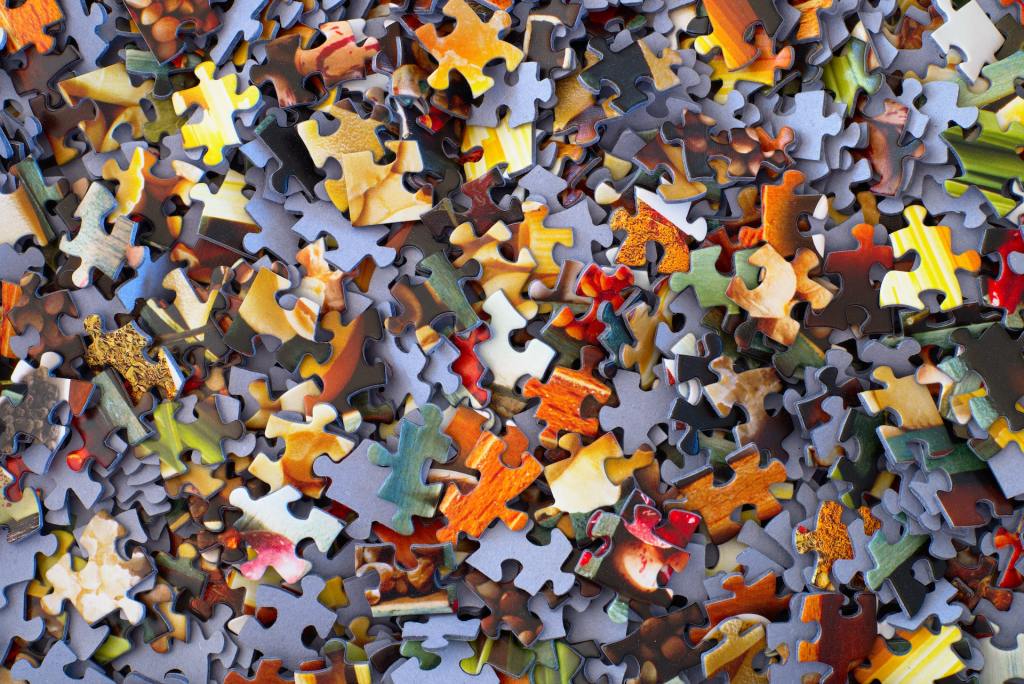
Along with some heart-warming and some personal stories, this blog is about having the courage to pick what can easily be described as the jigsaw of life and, with all its good and bad, to throw it into the air, disassemble it, and then piece by piece create a new and meaningful mosaic that brings new understanding and a better way of existing. A new reality. What is referred to by the psychologists and, interestingly, the Dalai Lama, as “Cognitive Restructuring”. Finding more profound and fuller answers to things like “how did I get here in life”, “why am I who I am”, “how do I stop others hurting me” and “what do I prevent loneliness or anxiety”, possibly even “how do I stop wanting to kill myself” and eventually “What is my purpose in life: What is my Ikigai”
The blog is about many things:
It’s about finding new ways to think and finding a resilience to cope better.
It’s about creating a better relationship with ourselves built on the understanding of how we tick.
It’s about turning over the pieces of our lives to unearth more of our great experiences as well as turning over the bad and the ugly and downright awful. Sifting through what we’ve been taught by others to find a better reality when we reconstruct the puzzle.
It’s about understanding why we are the toughest on ourselves and how to still be tough, but with a genuine love and respect for ourselves and others.
It’s about moving and morphing the thousands of old pieces of ourselves into a more colourful, stronger, joyful and effective road map that has real meaning for us and the loved ones around us.
I’ve personally spent sixty years on the path of cognitive restructuring, of rebuilding; interrogating my way of thinking, looking in every corner for answers for better ways to live, studying through research, therapy, reading, asking questions, asking “why?”, writing and journaling, testing the boundaries, meditation, relationships. Now it time to share some of what I’ve learned.
One of the things you’ll discover is that having a willingness to pull the jigsaw apart and start the restructuring all over again, climbing the ladder all the way from depressed victim up to joyful survivor; that’s Crossing The Bridge of Fire. It’s not easy.
We can always find great pieces to build a jigsaw framework. My great and positive pieces that the lucky readers might be able to resonate with are having started life with a stable family, a house, good health, enough money to just about get by, a post-war environment of stability, being close to nature and animals, a good education system, a good health system; all the kind of things that are far too easy today to take for granted. They each led to opportunities that took me into the world of adulthood, family and relationships whilst giving me the stability in a relatively open, democratic society to explore the freedoms that such a society offered.
The good pieces brought opportunities for employment and creativity, resulting in a number of worthwhile careers and businesses including being a pilot, therapist, teacher, photographer and general entrepreneur winning awards for design, productivity and business successes.
Each of those skills and experiences fostered new pieces with a developing sense of joy, purpose and spirituality as I travelled the world, climbed many beautiful mountains, lived for thirty years in a little wooden hut by the side of a glorious sea, travelled all over Europe in different forms of transport, and much more.
Whilst the outgoing me brought many great pieces to the table, as the years rolled by and I constructed a jigsaw with a more positive outlook on life, the introverted and suppressed me was also able to turn up with skills and awareness that brought positivity to the table.
Some of the less pretty pieces? Where was the fire for me? Well there were many of them too that needed courage to address, help to heal, especially within the experiences of my early years.
As a young lad, part of me was desperately unhappy, wanting to stop the world long enough to find my place in the world and be able to cope with a growing loneliness that didn’t make sense to me, knowing how many good things there were around me. Yet, unable to stop what seemed to me to be a juggernaut of life, demands for masculinity and toughness, scholastic and social expectations, I became an adult ill-equipped to deal with a life of responsibility.
Early on, like so many others, I created a facade of coping that distracted the world from knowing my real pain. I created a mask. Bullied, emasculated, scapegoated, unseen and abused on many levels, I slipped unnoticed through a net of caring that might have saved me from later self-destruction in adulthood and fatherhood. It was only through sheer hard work and wearing the mask of a dare devil that I muddled through my first decades of life.
Depression and victimisation were hallmarks of my inner self, along with a refusal to accept depression as a facet of my makeup, having experienced first-hand the awful destruction that chronic depression created in my mother.
Somewhere in the middle though, between the good and bad, there was also a fighter, a rebel, a quiet anger, a drive to loosen my shackles, to shrug off the oppressive control around me, to explore the world, to find good friends and enjoy life.
Blessed by an incurable curiosity and a sense of adventure the whole lot drove me to become the wary opportunist, always imagining great things, great deeds and great places, testing my boundaries, and always being a little cautious about the implications of breaking away until I’d taken the first step onto the path of adventure and was out in the zone of freedom. Skinned knees, hospital visits, bicycle accidents and lots of being shouting at were almost daily events that my inner adventurer excelled at.
With an awful track record in academia, I lived life more experientially than academically, learning kinaesthetically in the here and now, observing rather than being able to participate fully.
I became sensitive and attuned to what was going on around me or disappeared into fantasy world. But through intuition and feeling, a growing emotional intelligence emerged and I started to identify much of the bullsh*t surrounding me.
Whilst bringing gifts of understanding, it left me for long periods of time as a solitary person, unable to vocalise my hurt. It left me open to abuse of many kinds and I came to believe that my voice wasn’t worthy of being heard and worse stilI, I didn’t have the wherewithal to understand that it wasn’t my fault.
My story isn’t unique and those who connect with my story that I reach out to. Those who recognise that, despite doing the best to be good, to be strong, to achieve, to hide weakness, to wear the mantle of fun, success and reliability, that a part inside us can tumble deeper and deeper into a darkness that can’t be explained.
It’s the classic tale of a young person wanting to become strong in the eyes of others in order to be acceptable to his or her peer group, learning to hide weakness and vulnerability, to push down emotions and feelings whilst carrying the shame of knowing they exist. Learning not to cry, numbing out. Hating of our own perceived weaknesses.
As an adult I joined The Forces to grow the personal strength and survival skills that I desperately wanted in order to be able to cope better and to help leave behind a trail of disappointment and the failures of my past. I wanted to be more focussed, more of a success story, more of an achiever in the eyes of the world and my wife; I wanted to become a man, have the respect of others, and through maturity bring the hope of a better life for the children that I had brought into, or was about to bring, into the world.
Sure, I achieved many wonderful things and became the invincible warrior that I longed for, but it created a tragedy for the inner me. I thrived, then coped, then started failing to cope, then started to fall apart, the inner me voiceless and terrified, until in the wilderness years of my middle thirties, I found that hard work, sacrifice, pushing myself way beyond my limits, and keeping a brave face on it all hadn’t worked. Despite my greatest efforts to avoid a breakdown, my life crumbled.
I survived not-going-crazy because I had a wild determination to pull through, and an untapped faith inside me that gave me hope for a better future. The responsibilities to care for my young family and to keep a job that kept the bills paying, provided the determination to stay in control, but that alone wasn’t enough to stop the destructive thoughts inside my head from wanting to end the life that brought so much confusion; it was faith that kept me from going under.
From a young age I had fostered an inquisitiveness into alternative ways of thinking about my life and its connection to the world around me, as the overbearing religion of my childhood had left me scared, scarred and unimpressed with its teachings. Keen to find something more understandable that my practical and scientific brain could accept that would replace the mixed message of salvation only gained through sacrifice to one God, I closed the door on my church and left open a space in my head ready to receive better instructions.
Because I never closed the door on faith, I became inquisitive into what lay beyond and looked into the wealth of information that lay in the world outside my parish. Spirituality, the occult, comparative religious studies, yoga, healing, buddhism, zen, all led me into realms of possibilities and understanding in what I might intrinsically have faith in, even though before my transition (my breakdown really) I didn’t know what it was I actually had faith in. Believing in the solidity of science and logic, I wasn’t ready to accept that there was something else until I had experienced it with my own eyes, but it didn’t stop me having faith that there was more and that it was good.
During my transition though, my jigsaw was torn apart mercilessly and every thought and feeling I had was challenged, destroyed or brought into focus.
An old, painful, earthly life died in the fires of change whilst a new life of hope, salvation, faith and belief arrived to take its place.
It wasn’t about a Christ consciousness or a needing to read the bible, but it was about believing that love is a higher power and that somehow, we are connected to each other and the world around us in more ways than just touching, seeing and hearing.
To become a sane person once more, I needed to embrace a completely new world that included for the first time, learning to love and nurture myself.
The result was that following that beautiful, catastrophic doorway of rebirth that I had to pass through, I needed answers to help me exist more peacefully in my new world.
Bearing in mind I was right in the middle of what would in modern times be classified as complex PTSD but without the professional help that is available today, I searched for anything that I could lay my hands on to help my own healing get back on track and return to being the coping father and provider I needed for my family.
My ever-widening search included psychology, spirituality, gentleness, finding self-worth, journaling, research and holistics as ways of connecting with an unconscious me that was fighting the punishing narrative I had created many years before to be, and failed to be, the perfect father, perfect carer and perfect rescuer of the needy.
My inner search became my daily practice of meditation and self help, upturning my jigsaw again and again, finding better ways to let go of the self-hatred and shame that had pushed me towards my own self-destruction.
There is no way to gloss it up: recovery from profound trauma and PTSD takes time to overcome and readjust to. It takes years, if not decades, for care and healing to return a human being back to a semblance of sanity that fits with authenticity into a world that has the space and time for them. It takes great personal courage to fight the demons and addictions, and great tolerance from family and friends to help someone through their darkest days of nightmares, anger and depression.
It took me three decades to work through my own traumas, during which time I lost my family and my credibility as a normal, sane, member of society.
There is no way for me to be able to categorise the manner in which trauma and PTSD arises, the way it specifically affects a person and the methods or manners in which healing can take place, but what I can say, which is reflected in so many other’s stories, is that when the journey to recovery also becomes a spiritual journey, then healing moves to a different plane.
What was about escaping mental anguish and tragic loneliness became a fulfilling search for meaning. What was about finding tolerance to cope became a search for the joy of life. What seems to take an eternity, moved faster when the spiritual element emerged into my quest.
It was during my own delicate and chaotic years of recovery, the relationships it spanned and the addictions it created that the challenges and solutions for a better life pushed me towards healing at ever deepening levels and my search for body/mind wholeness got a real grasp.
Joy, happiness, and the kind of success I had been yearning for slowly become reality in the second half of my life.
New careers furnished new opportunities, new worlds opened up and astonishingly diverse businesses took off, nourished by the skills and ability to take better, more wholesome risks. I grew faith in the power of healing and a joy in connecting with people in a way I had never achieved before.
The story is without doubt a positive story in that the potential for joy comes about from having faith in our willingness to see and overcome the darkness in our past, and faith in being able to find a true purpose that aligns perfectly with our unconscious drives.
Success comes from mastering failure. Love comes from mastering loneliness. Courage comes from mastering fear and insight comes from a spiritual journey that puts meaning into why “I” am here, and when found, finding fulfilment in creating the best people we can be, whatever it is.
It is by being willing to throw our personal, vulnerable jigsaw into the air again and coupling it with the intention to be the best person we can be, that we can move forward into the light and into the healing we deserve.
Next: Chap 2: Headhunters


 Love is an Action
Leave a reply to Anne Cancel reply